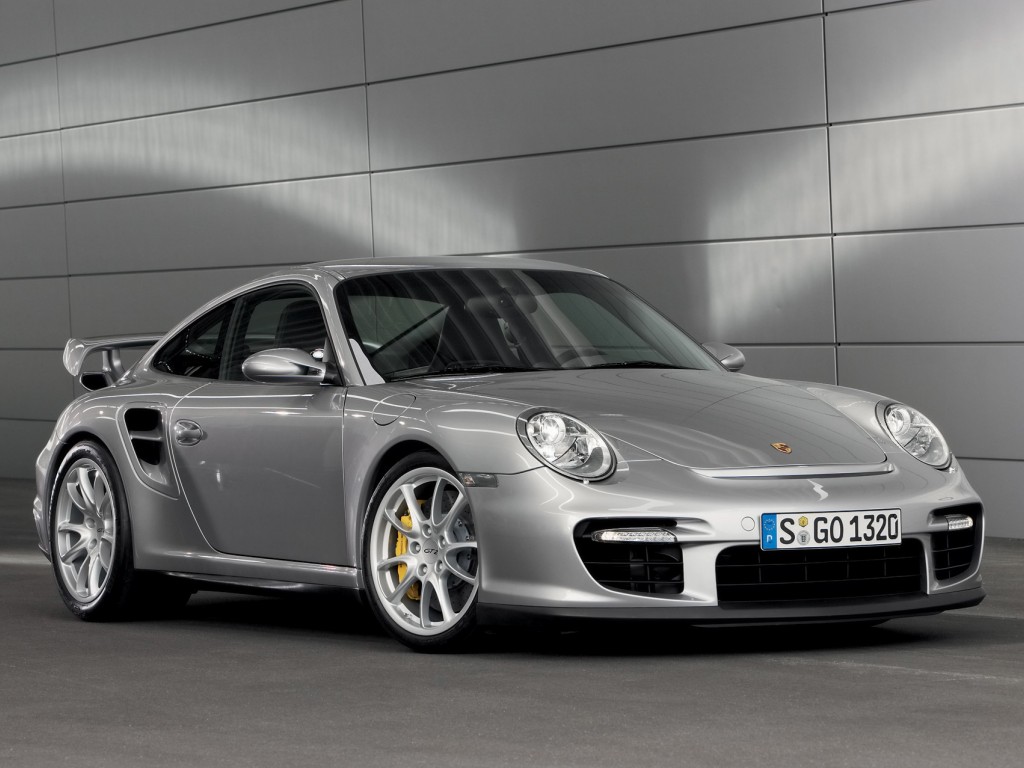
CHEVROLET CAMARO SS

CHEVROLET CAMARO SS

The Chevrolet Camaro was a compact car introduced in North America by the Chevrolet Motor Division of General Motors at the start of the 1967 model year as competition for the Ford Mustang.
Although it was technically a compact (by the standards of the time), the Camaro, like the entire class of Mustang competitiors, was soon known as a pony car.
CHEVROLET CAMARO SS
Though the car's name was contrived with no meaning, General Motors researchers found the word in a French dictionary as a slang term for "friend" or "companion." Ford Motor Company researchers discovered other definitions, including "a shrimp-like creature" and an arcane term for "loose bowels"! In some automotive periodicals before official release, it was code-named "Panther".
Four distinct generations of the car were produced.
Generation 1
1967
CHEVROLET CAMARO SS
Sharing mechanicals with the upcoming 1968 Chevrolet Nova, the Camaro featured unibody structure. Chevrolet offered the car in only two body styles, a coupe and convertible. Almost 80 factory and 40 dealer options including three main packages were avaible.
* RS Package included many cosmetic changes such as RS badging, hidden headlights, blacked out grill, revised taillights and interior trims.
CHEVROLET CAMARO SS
* SS Package included modified 5.7 L (350 in³) V8 engine (first 350 in³ engine ever offered by Chevrolet), also L35 396 in³ "big block" was avaible. SS featured non-functional air inlets on the hood, special striping and blacked out grill. It was possible to order both - RS and SS packages to receive RS/SS Camaro. In 1967 Camaro RS/SS Convertible Camaro with 396 in³ engine paced the Indianapolis 500 race.
CHEVROLET CAMARO SS
* Z28 option code was introduced in 1966. This option package wasn't mentioned in any sales literature so was unknown by most of the buyers. The only way to order Z28 package was to order base Camaro with Z28 option, front disc brakes, power steering and Muncie 4-speed transmission.

Z28 package featured unique 302 in³ "small block" engine, designed specifically to compete in the Club of America Trans Am racing series (which required engines smaller than 305 in³ and public availablity of the car).
Advertised power of this engine was listed at 290 hp (216 kW) while actual dyno readings rated it at 360 to 400 hp (269 to 298 kW). Z28 also came with upgraded suspension and racing stripes on the hood. It was possible to combine Z28 package with RS package. Only 602 Z28's were sold.
Generation 2
The larger second-generation Camaro featured an all-new sleek body and improved suspension. The 1970-1/2 Camaro debuted as a 2+2 coupe; no convertible was offered and would not appear again until well into the third generation.
Most of the engine and drivetrain components were carried over from 1969 with the exception of the 230 in³ (3.8 L) six cylinder -- the base engine was now the 250 in³ (4.1 L) six rated at 155 hp (116 kW).
The top performing motor was a L-78 396 in³ (6.5 L) V8 rated at 375 hp (280 kW). (Starting in 1970, the 396 in³ big block V8's actually displaced 402 in³ (6.6 L), yet Chevrolet chose to retain the 396 badging.) Two 454 in³ (7.4 L) engines - the LS-6 and LS-7 - were listed on early specification sheets but never made it into production.
Besides the base model, buyers could select the "Rally Sport" option with a distinctive front nose and bumper, a "Super Sport" package, and the "Z-28 Special Performance Package" featuring a new high-performance 360 hp (268 kW) 350 in³ (5.7 L) cid V8.
1972
The 1972 Camaro suffered two major setbacks. A UAW strike at a GM assembly plant in Ohio disrupted production for 174 days, and 1100 Camaros had to be scrapped because they did not meet 1973 Federal bumper safety standards.
Some at GM seriously considered dropping the Camaro and Firebird altogether, while others were convinced the models remained marketable. The latter group eventually convinced those in favor of dropping the F Cars to reconsider, and Chevrolet would go on to produce 68,656 Camaros in 1972, the lowest production numbers for any model year.
Generation 3
1982
The 1982 model introduced the first Camaros with factory fuel injection, four-speed automatic transmissions (three-speed on the earlier models), five-speed manual transmissions (four-speed manual transmissions in 1982, and some 83-84 models), 15 or 16-inch rims, hatchback body style, and even a four-cylinder engine for a brief period (due to concerns over fuel economy).
The Camaro Z28 was Motor Trend magazine's Car of the Year for 1982.
1985
In 1985 Chevrolet introduced a new Camaro model - the famous IROC-Z, called after popular racing series. IROC-Z Camaro featured upgraded suspension, special decal package and Tuned Port Injection system taken from the Chevrolet_Corvette Third generation Camaros also had a suspension system that was more capable in corners than the previous generation.
The Camaro IROC-Z was on Car and Driver magazine's Ten Best list for 1985.
Engines
* 1978-1981 5.7 L (350 in³) Small-Block V8
* 1982-1985 2.5 L (151 in³) Iron Duke L4
* 1982-1984 2.8 L (173 in³) LC1 V6
* 1985-1989 2.8 L (173 in³) LB8 V6
* 1990-1992 3.1 L (191 in³) 60 Gen II V6
* 1982-1992 5.0 L (305 in³) Small-Block V8
* 1985-1992 5.7 L (350 in³) Small-Block V8
CHEVROLET CAMARO SS
Generation 4
1993
1993 began the fourth and last generation of Camaros, lasting through the 2002 model year. Production of the fourth and final generation was moved from GM's Van Nuys, California assembly plant to one in Ste. Therese, Quebec in 1993.
Though the car would no longer be produced in the US, the new design which incorporated lightweight plastic body panels over a steel space frame, and a better suspension, further improved upon the Camaro line.
From 1993 to 1997 the Camaro was available with the LT-1 engine, the same Generation II small block V8 used in the Corvette, although in slightly de-tuned form.
In 1996, the long-discontinued "SS" option was resurrected and in 1998, the all-new LS-1 engine Generation III small block was offered on the SS and Z28 Camaros, marking the end of the Generation I small block V8 that had its roots in Chevrolet's 265 in³ engine of 1955. Unfortunately, sales were below expectations, and production of the Camaro ceased in 2002.
1998
1998 saw a new head light design for the Camaro. The new design removed the previous recessed-light design present in the 1982-1997 Camaros. The faux air intakes on the hood were also eliminated. In addition the LT1 engine was removed and instead an LS1 in its place.
Engines
* 1993-1995 3.4 L (208 in³) 60 Gen III V6
* 1995-2002 3.8 L (231 in³) 3800 Series II V6
* 1993-1997 5.7 L (350 in³) LT1 V8
* 1998-2002 5.7 L (350 in³) LS1 V8
2002
2002 marked the last year of the Chevrolet Camaro and was also the 35th anniversary for the Camaro. This milestone was celebrated with a special anniversary car modified from the factory by SLP. The anniversary package was only available on the SS (Super Sport).
Engine modifications were available in addition to the 325 hp (242 kW) engine which all Super Sports produce. Silver racing stripes down the hood and trunk lid made the car more noticeable than ever--especially against the Bright Rally Red paint (the only color available with the anniversary package).
CHEVROLET CAMARO SS
The car also had the slogan attached to it "Leave a Lasting ImpreSSion" and had the logo embroidered in the seats. The car was only available as a convertible or with T-Tops. 3,000 Camaros with the anniversary package were produced for the United States and 152 for Canada.
Though production Camaros were never as fast as the flagship Corvette, the car cost less than half as much and was easily modified. If its frequent inclusion in automotive enthusiast magazines is any indication, the Chevy Camaro is one of the most popular cars for modification in the automotive history.
Throughout its history, the Camaro shared its internal body and major components with a sister car - the Pontiac Firebird.
chevy camaro [http://chevy-camaro.biz] - Take advantage of information on this prestigious car brand. Learn about its rich heritage, about chevrolet & the importance of this brand for GMC. Details on its technicalities have been dealt with in detail.

2011 Bugatti Veyron Super Sport On Oto Cars

“It is not possible,” was the answer from Jens Schulenburg, Bugatti vehicle engineering chief. He was answering the question as to whether a standard Veyron could be modified to be as fast as the 2011 Bugatti Super Sport edition. “It is like a domino effect,” he explained, “To get more horsepower, you need more cooling. To get more cooling, you need more airflow through more and bigger radiators. To accomplish this, you need to redesign the front end. When you do that, you change the aerodynamic balance of the car at speed. To rebalance the car, you need to change the roof and rear fascia.” Schulenburg could have kept going. For an hour.
We got the picture: The $2.58 million Super Sport is not a standard Veyron with a chip. Shame on you for even thinking that. Consider the Super Sport a Veyron 2.0 release; a significant re-engineering of the 1001-horsepower, sixteen-cylinder, quad-turbo, all-wheel-drive supercar.
Bugatti Veyron Super Sport
But given the Veyron’s sales success – they’ve sold approximately 260 since the vehicle’s debut in 2005 – why go to all the trouble for a maximum of 40 cars? (Bugatti will cease Veyron coupe production at 300 units.) “Current Veyron owners wanted a more dynamic, exciting driving experience,” said Julius Kruta, Bugatti’s Head of Tradition. “Most of the orders booked for the Super Sport are from current Veyron owners. They asked us for a car that felt more extreme.” Is that even possible? We flew to Spain to find out.

Honda CBR 250 RR has been Launched

Honda CBR 250 RR
Jakarta - CBR 250 RR enliven will of the Indonesian automotive market exchanges. The assurance Came after PT Astra Honda Motor plans to market the AHM model or the latest sports duo of CBR.

According to Executive Vice President Director of AHM Johannes Loman, it indeed is planning to market the Honda CBR.

However, AHM Until now still studying how much potential the motorcycle market in Indonesia. The original plan, the motorcycle is supplied from Thailand as a whole (CBU).
"If a big market, our local raft on. But Because of the small, CBU," he said.
This plan Could Be going to break the dominance of the Kawasaki Ninja 250 so far That pitch alone. Especially if the price of cans be under a two-cylinder motor from the Kawasaki. However, for Loman it was not an easy job.
"Placing CBR 250 below the price of the Ninja 250 is not easy. But if I cans, Yes We will do," he concluded.

Present in Paris Mini Countryman | Oto Cars

Mini Countryman
One of the most prestigious automotive exhibition in Europe, Paris
Motor Show has been officially deployed. Some automobile manufacturers use this event to bring products lawasnya.

Acura 1997 Owners Manual PDF-Acura Online Auto Manual

1997 Acura TL
Acura 1997
1997 Acura TL is an outstanding car, comfortable and good looking car that never fails to impress. comes with 3,2 L with V6 engine this Acur TL are also available in 1997 Acura TL Base Sedan and 1997 Acura TL premium Sedan. Below you’ll find owners manual that contains safety instruction, maintenance and simple troubleshooting instruction guide and reference for Acura TL 1997 that help you during maintain your Acura TL and help you while common probles is occur: likes 97 acura tl alarm, 1997 acura motor tl cover gasket valve power windows speed sensors radio code acura tl 1997 32 acura tl acura horn etc. Download the manual for owners 1997 Acura TL trough this link

2011 Bentley Continental GT: first official photos | Oto Cars Luxury


As it had been announced, today released the first official photos Bentley Continental GT model was the 2011th, which will premiere September 30th at the Paris Motor Show. September at the Paris Motor Show.
The appearance of the Continental GT in 2011 compared to the previous version is not much changed, and bearing in mind the fact that since 2003. The appearance of the Continental GT in 2011 compared to the previous version is not much changed, and bearing in mind the fact that since 2003. (When this model appeared) to date sold more than 22,000 copies, it is clear why the factory decided to evolution rather than drastic changes. (When this model appeared) to date sold more than 22.000 copies, it is clear why the factory decided to evolution rather than drastic changes.


However, the greatest changes occurred in the front and rear of the coupe. However, the greatest changes occurred in the front and rear of the coupe. This includes polished front LED lights (inspired by the new model Mulsanne), front fenders, bumper and grill and rear lights and tailgate. This includes polished front LED lights (inspired by the new model Mulsanne), front fenders, bumper and grill and rear lights and tailgate.
 
 
With the new design wheels (standard 20-inch with 275/40 ZR20 tires, optional 21-inch with 275/35 ZR21 tires), pobojšanu aerodynamics (reduced air resistance coefficient of 0.33) and a modified interior (where he now has a 5 cm more leg room for rear passengers), it is the shortest it. With the new design wheels (standard 20-inch with 275/40 ZR20 tires, optional 21-inch with 275/35 ZR21 tires), pobojšanu Aerodynamics (reduced air resistance coefficient of 0:33) and a modified interior (where he now has a 5 cm more leg room for rear passengers), it is the Shortest it.
 
 
2011 Continental GT is also lighter than its predecessor (for 65 kg), slightly more economical, have improved comfort and handling, while the 6.0-liter W12 engine enhanced (paired with an enhanced six-speed transmission Quickshift). 2011 Continental GT is also lighter than its predecessor (for 65 kg), slightly more economical, have improved comfort and handling, while the 6.0-liter W12 engine enhanced (paired with an enhanced six-speed transmission Quickshift).
 
 
Specifically, the engine now develops 423kW/575KS at 6,000 rpm. Specifically, the engine now develops 423kW/575KS at 6.000 rpm. and 700 Nm of torque at 1700 rpm. and 700 Nm of torque at 1700 rpm. (Formerly 560KS and 650 Nm), acceleration from 0-100 km / h is reduced to 4.4 seconds while top speed 318 km / h. (Formerly 560KS and 650 nm), acceleration from 0-100 km / h is reduced to 4.4 seconds while top speed 318 km / h. According to factory records, fuel consumption in combined cycle is 16.5 liters per 100 km (in the city of 25.4 liters) and CO2 emissions is 384 grams per kilometer. According to factory records, fuel consumption in combined cycle is 16.5 liters per 100 km (in the city of 4.25 liters) and CO2 emissions is 384 grams per kilometer.
 

Later will be offered a new 4.0L V8 engine that is expected at the Salon in Geneva 2011th Later will be offered a new 4.0L V8 engine that is expected at the Geneva Salon in 2011th years. year.
Here and data dimrenzijama: 2011 Continental GT is 4806 mm long, 1944 mm wide (with mirrors 2227 mm), high 1404 mm, wheelbase is 2746 mm and luggage compartment has a volume of 358 liters and 90 liters tank. Here and data dimrenzijama: 2011 Continental GT is 4806 mm long, 1944 mm wide (with mirrors 2227 mm), high 1404 mm, Wheelbase is 2746 mm and luggage compartment has a volume of 358 liters and 90 liters tank.
Sales Continetala 2011 GT runs in the first half of the 2011th and pricing have not yet known. Sales Continetala 2011 GT runs in the first half of the 2011th and the price currently not known.

Auto Insurance Shopping | Oto Cars


Understand How Auto Insurance Rates Are Set Auto Insurance Shopping:
(NC)—If you're shopping around for auto insurance it's important to know how insurance companies set their rates. Many factors are at play, so here are some useful tips from the Financial Services Commission of Ontario (FSCO), the regulator of the auto insurance industry in Ontario, to keep your rates as low as possible.

The auto insurance rate you are charged will depend upon:

• The type of vehicleyou drive. Auto insurance companies evaluate vehicles based on their makes and models, according to their claims experience. Vehicles with lower costs for repairs, lower rates of injury, and lower incidences of accident and theft, will receive lower rates.

• Your driving record, which includes your years of driving experience, past at-fault accidents, completed training courses, and convictions such as speeding or impaired driving.

• Driving routine and frequency. The more time you spend on the road, the higher the chances of becoming involved in an auto accident.

• Where you live. If you live in a busy urban area, there is greater risk for accidents and theft, thus higher rates are charged.

• Your age. Costs are generally lower for drivers 25 years of age and older.

• The amount of coverage you purchase. Your insurance rates will be higher if you purchase additional protection beyond what is mandatory, such as the optional collision coverage, which protects you for damage to your vehicle, regardless of who caused the accident.

• The deductible, which is the portion of a loss that you are required to pay. Your deductible can vary depending on the type of coverage you purchase and the percentage of fault you are assigned in the event of an auto accident. There are deductibles for direct compensation-property damage, collision or upset, comprehensive, all perils, and specified perils coverage. If you opt for a higher deductible, your rates will likely be lower.

• The insurance company you choose. It's important to shop around because financial factors unique to each insurance company will influence your rates. Insurance works according to a "pooling" concept. Your rates are based on the claims experience of the entire group. Some insurance companies have claims that are much higher than others. This results in some insurance companies setting higher rates than others for the same type of insurance coverage.

Factors that cannot affect insurance rates

Under Ontario law, insurance companies cannot use certain criteria to set your auto insurance rates, such as: credit history or rating, past bankruptcy, income and employment status, debts, whether you rent or own a home and not-at-fault accidents.

More information on auto insurance is available online at www.fsco.gov.on.ca where you can download the brochure Understanding Automobile Insurance.

Best Cars Community | Oto Cars


A Perfected Past - Antique Classic Car Shows

A classic car show is pure phantasmagoria to any automotive aficionado. Epitomes of automotive elegance, power and performance, classic car shows fuse nostalgia and admiration into one glorious event.

The Auto Show

Entrants must pass certain criteria, including;

• Age of manufacturing;
• Historical accuracy;
• Technical specifications;
• General upkeep, etc.

The cars are divided into classes. There are many types of classes, which vary by each auto show. Classes are determined by:

• Vehicle age;
• Production model and trim;
• Geographic origination;
• Stock condition;
• Colloquial category (i.e. “muscle car”).

Judges rate vehicles based upon historical accuracy, technical specifications, style, etc.

However, the most complicated question is not rating a classic car; it’s deciding what a classic car is. Everyone seems to know, and no one seems to agree.

The Elusive Classic Car

“Classic car” is an elusive term to nail down. Some ardently categorize only 1925-1948 vehicles as classic cars, while some would name a 1969 Dodge Challenger with the same moniker. However, establishing a few general parameters may help to even the waters.

Cars built before the 1920s are generally considered antique or vintage vehicles. Cars produced after the early 1980s are typically classified as “modern-era.” The Classic Car Club of America (CCCA) gives a range of 1924-1948, but insurance industries allow for a “historic vehicle” classification after a car’s 21st birthday. Confused? So is everyone else.

The CCCA gives some general criteria for clarification.

• They were produced and currently exist in limited quantity.
• They were “fine” and “distinctive” creations of their times.
• They were aesthetically beautiful.
• Manufacturing was of premium quality.
• They typify an idyllic standard.

Therefore, one can welcome a 1966 Chevrolet Camaro SS, 1955 Ford Fairlane or 1930 Alfa Romeo 6C 1750 Super Sport Zagato Spider to the same stage.

Popular Antique Classic Car Shows

• Concours d’Elegance exemplifies flawlessness. The most renowned exhibition is at Pebble Beach, California.

• The CCCA Grand Classics exhibit the best 1924-1948 cars in America.

• Detroit adds new spice to old cars with its Woodward Dream Cruise. Expect to see thousands of hot rods, vintage automobiles and gorgeous classics.

• The Barrett-Jackson Auto Auction bills itself as, “The World’s Greatest Collector Car Auctions.” Most would agree.

• The Route 66 Rendezvous turns the streets of San Bernardino, California into a procession of automotive treasures.

Care to see more? Get to a classic car show.


There are many famous and not so famous antique classic car shows around the country. A few of the most famous are mentioned in the article above, but you can go and see some great cars at that little car show around the corner from your house. Check your area's classic car show schedule this spring, summer or fall and go out and take a look at these beautiful antique classic cars.

Car Insurance How To Find The Best Policy


Car insurance and how to find the best policy for you (and the cheapest!). Find the best deal

Car insurance is something every car owner needs (it is required by law), but car insurance can be an expensive proposition. Depending on your age, driving record, the area you live in, the distance you drive in a given year, and type of car you drive, you could be paying thousands of dollars a year.

As with any purchase, it is smart to shop around, compare quotes and see what best suits your needs. The internet has simplified this process, with insurance companies offering online quote questionnaires that are simple to fill out and usually generate a quote amount quickly. These questionnaires are generally the same, asking for age, driving experience, accident history, whether you have been insured before, distance you drive in a year, distance you drive to work, and whether the vehicle is used for business or pleasure.


These questions give companies a basic profile of your driving record, but the questionnaire will ask other things you should not ignore. Be sure to note if you have any anti-theft devices, how many, and what they are specifically. This is less a problem with modern cars, since most come with at least an alarm pre-installed. However, the more anti-theft devices in the car, such as a kill switch, boomerang, even glass etching, can significantly reduce the amount you pay, especially if you live in an area insurance companies consider “high-risk”.


If you happen to have two or more vehicles, be sure note you’d like a multiple car discount. Generally, this won’t reduce your rate, but it won’t increase it much (if at all) either. If you’re planning on selling your other vehicle, one trick is to cover that vehicle for liability only, so you can get the discount.


If you’re part of any groups or organizations, see if you qualify for a discount. Many insurance companies will knock off a few dollars for people who are affiliated with professional organizations, alumni groups, even fraternities and sororities. Check with your credit card company, too. Credit card holders can also qualify for group discounts, depending on the card.


Consider combining your home insurance policy with your car insurance. Most companies will offer a deep discount if you do this, ranging from 5 to 20 %. This is usually an option you’ll find at the beginning of the online questionnaire.


Also be sure to check and see if the questionnaire enquires about any drivers education or defensive driving courses. The more you can show the insurance company you’re a safe driver, the more you will benefit.


One thing you should watch out for is redundant or unnecessary coverage. If you have a health insurance policy, you might want to avoid or reduce the medical coverage included in your car insurance policy. Consider getting only liability coverage on a car worth $1000 or less. You can also raise your deductible. Carrying a $500 deductible as opposed to a $250 or $0 deductible will lower your quote substantially.


Remember, you want to find the company that offers YOU the best rate. Be sure to compare multiple quotes from several different companies. What is the cheapest for one person is not always the cheapest for another.

2010 Acura MDX wallpaper


2010 Acura MDX2010 Acura MDX
2010 Acura MDX2010 Acura MDX side view
2010 Acura MDX2010 Acura MDX rear view
2010 Acura MDX interior2010 Acura MDX Interior

2010 Acura TL SH-AWD wallpaper


2010 Acura TL SH-AWD Manual2010 Acura TL SH-AWD Manual
2010 Acura TL SH-AWD Manual2010 Acura TL SH-AWD Manual rear view
2010 Acura TL SH-AWD Manual2010 Acura TL SH-AWD Manual side view
2010 Acura TL SH-AWD Manual interior2010 Acura TL SH-AWD Manual Interior

2010 Acura RDX interior


2010 Acura RDX2010 Acura RDX
2010 Acura RDX2010 Acura RDX rear view
2010 Acura RDX interior2010 Acura RDX interior

2010 Lincoln MKT wallpaper


2010 Lincoln MKT2010 Lincoln MKT
2010 Lincoln MKT2010 Lincoln MKT side view
2010 Lincoln MKT2010 Lincoln MKT rear view
2010 Lincoln MKT Interior2010 Lincoln MKT Interior

2010 Daihatsu Mira Coco wallpaper


2010 Daihatsu Mira Cocoa2010 Daihatsu Mira Cocoa
2010 Daihatsu Mira Cocoa2010 Daihatsu Mira Cocoa rear view
2010 Daihatsu Mira Cocoa Interior2010 Daihatsu Mira Cocoa Interior

PORSCHE 911 PICTURE


PORSCHE 911 PICTURE
PORSCHE 911 WALLPAPER

PORSCHE 911 PICTURE
PORSCHE 911 IMAGE

PORSCHE 911 PICTURE
PORSCHE 911 PICTURE

2010 Lincoln Mark LT Wallpaper


2010 Lincoln Mark LT2010 Lincoln Mark LT
2010 Lincoln Mark LT2010 Lincoln Mark LT side view
2010 Lincoln Mark LT Interior2010 Lincoln Mark LT Interior

CITROEN DS3 IMAGE


CITROEN DS3 WALLPAPER


CITROEN DS3 WALLPAPER
CITROEN DS3 PICTURE


CITROEN DS3 WALLPAPER
CITROEN DS3 IMAGE